EMV is Turning One…But What Do People Really Think of It?

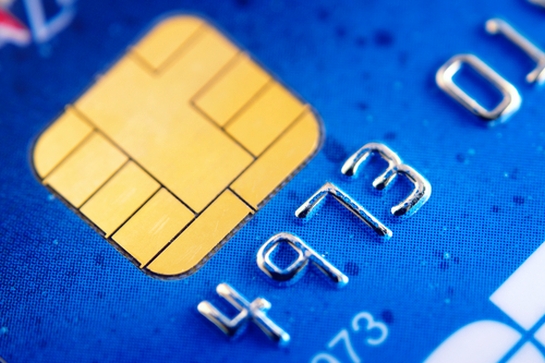
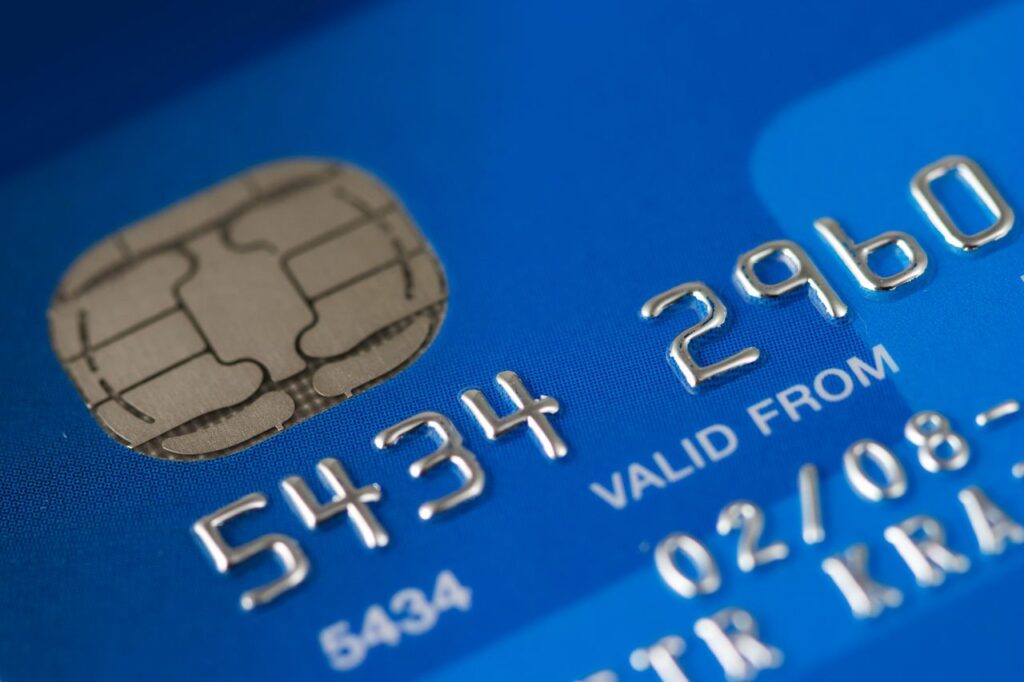
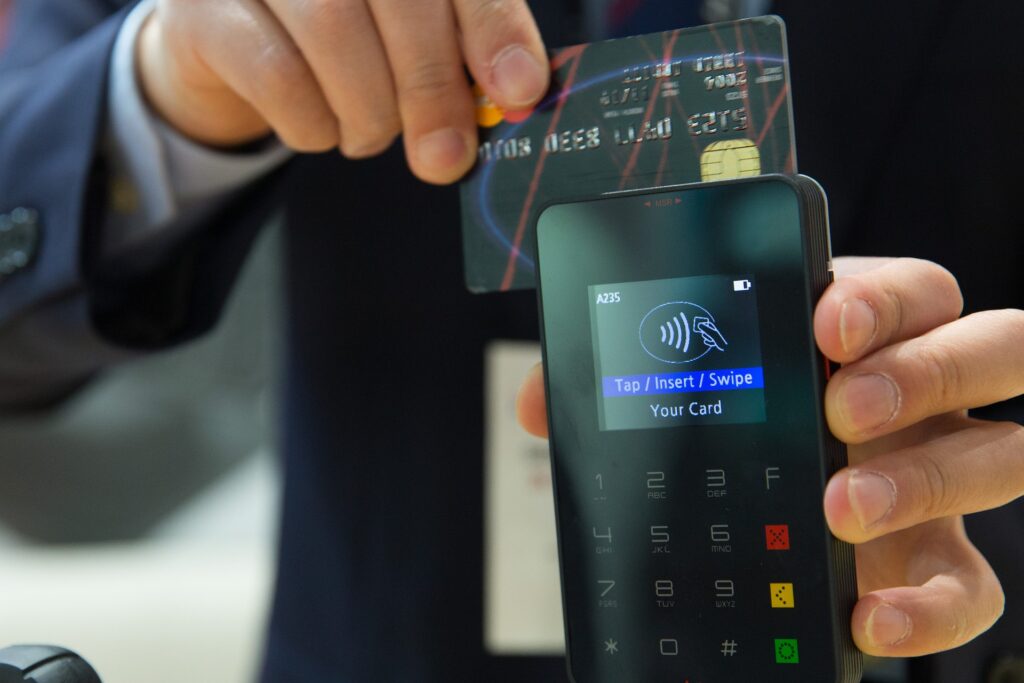
More than a decade ago, EMV chip cards made their way onto the payment circuit. Despite their promises of enhanced security and protection, however, they didn’t garner much attention.
Until 2013, that is.

2013 was a year that saw a rash of security breaches amidst high-profile stores, such as Target. With consumers facing greater technological risks than ever before, the retail market and payment networks began to reevaluate the benefits of chip card acceptance.

As of October 1, 2015, a new law mandated that all retailers accept chip cards, or else face potential liability for fraud.

Rather quickly, we saw banks reissuing new chip cards to customers, and stores and restaurants across the United States installing vamped up POS systems that are capable of accepting the EMV cards.

So now that we’ve hit the one year anniversary…what do people really think?

The Difference a Year Can Make

In a recent report, prepared by Visa, we received some pretty incredible information. Here’s just a few of the present day statistics concerning chip card usage.

  • There are currently more than 363 million Visa chip cards in use.
  • Almost 1.5 million retailers and merchants now accept chip cards.
  • Payment counterfeit fraud is down 47%.

While these stats seem quite impressive, it should be noted that we are still far from having an entirely chip-based payment protocol. The same Visa report cites that the 1.5 million vendors previously mentioned only represents about 37% of their business accounts.

Businesses that have made the necessary changes to their existing POS software have also encountered endless issues along the way.

Some of the common concerns are:

  • In-store distribution challenges
  • Difficulty obtaining necessary hardware and software
  • Issues over programming delays

Do Customers Approve?

Moving beyond the problems that have arisen from the retailer’s standpoint, consumers themselves aren’t entirely happy with the new, standard payment processes.

While it may seem insignificant, the time it takes for customers to run their cards has become an annoyance. Men and women are used to a quick slide of their card that takes about two seconds. With chip-card technology, they are now required to leave their cards in the reader for ten seconds or more.

This slowdown is enough to cause a sense of aggravation amongst consumers and has card companies considering a new Quick Chip technology.

While this new technology could remedy the amount of time it takes at the checkout counter, merchants seem to be understandably gun-shy about undergoing another software transition.

Where Do We Go From Here?

We’ve come so far in just over a year, but the future of chip-card technology seems a little uncertain. While the US is consistently moving forward with the transition to exclusive EMV card acceptance, there’s still a large number of bugs that need to be worked out.

The question becomes…what will things look like at the end of year two?

Visit our online store to view our complete selection of POS products.

We’re Living in a Mobile POS World

The tech-savvy consumers of today have a deep love for their devices…and we, as businesses, are right there with them.

Society has reached a golden age where nearly everything can be completed through the use of a cell phone. You can order a pizza, manage your bank account, and watch movies on the go. It’s no surprise that cell phones have commonly become a digital alternative to traditional POS systems.

At the end of 2015, there were more than six million mobile POS terminals being used by businesses all over the world. The popularity of these systems continues to grow on a daily basis and is changing the way companies are handling their transactions.

Mobile POS Systems like Square and Pay Pal Here, allow businesses the luxury of accepting credit card payments in locations where they ordinarily wouldn’t have been able. For instance, maybe you don’t have access to a traditional transaction terminal. Or maybe you don’t have the need for one. These mobile systems provide a sense of flexibility to business owners and employees while still offering customers the convenience of using their credit and/or debit cards.

In terms of competition, Square and Pay Pal Here are pretty comparable to one other. Each system offers a variety of different benefits that are necessary components of an ideal POS terminal.

Here are just a few of the great features you’ll receive from both of them:

Basic Hardware Needs

With Square and Pay Pal Here, all you need to get started is a smartphone or tablet. When you sign up with either of these services, you’ll receive a free basic mag strip card reader (you can upgrade to an EMV reader for a small fee.) The services also come with a free app to handle your transactions.

Amazing Operator Services

Both mobile POS services offer great features such as multiple user authorization and receipt printer compatibility. Individually, they each offer unique services that set them apart, as well:

  • Pay Pal Here has a great photo capture card acceptance method.
  • Square offers an incredibly useful offline mode that works for businesses no matter what their Internet situation is.

No Contracts or Early Termination Fees

Neither Square nor Pay Pal Here requires any sort of contract or monthly fee. You have the flexibility to change services at any point without the risk of fees and/or penalties.

Square and Pay Pal Here: Two Great Choices for Mobile POS Services

When it comes to selecting the best mobile POS service for your company, there are so many different options available. Both Square and Pay Pal have been around for quite some time and offer reliable services that you can trust. Their fantastic features provide an experience consumers can trust in, and business owners a terminal they can rely on.  So step on into this mobile era…the perfect POS service is waiting for you.

Visit our online store to view our complete selection of POS products.
Why the Switch to EMV Remains Slow – And How You Can Stay Secure

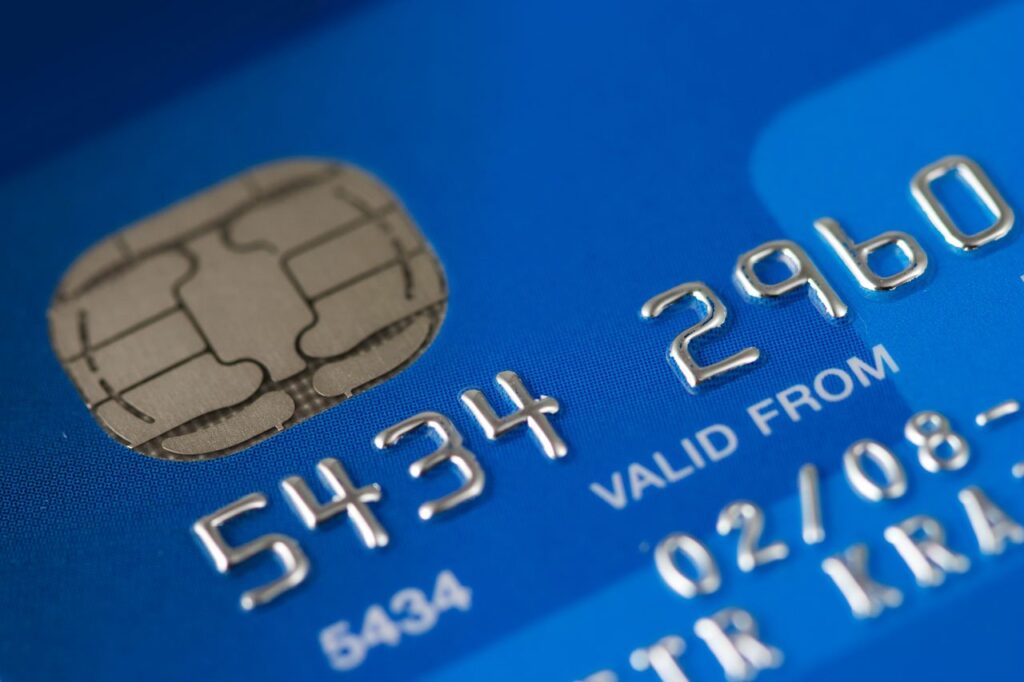
Banks have converted around 60% of their debit and credit cards to EMV cards, which are more secure than traditional magnetic strip technology. These cards generate a random number at the time of the transaction, making them much more difficult to counterfeit than traditional credit cards.

Although the United States is responsible for about 50% of fraud worldwide, the changeover remains slow.

Most of the big retail chains, such as Walmart, Target, and Best Buy, have already converted to the EMV-enabled POS systems. Small businesses that use simple systems have also converted.

However, about 42% of businesses – most of which are mid-sized companies – haven’t made the switch. And, among those companies that have switched, they still run into problems.

In fact, according to some industry reports, 4 out of 5 EMV-enabled card readers aren’t able to accept chipped credit cards.

What’s Causing the Delay?

There are several reasons for this:

  • One problem isn’t the hardware – it’s the software. In order to be able to accept chipped cards, custom POS software must become certified by each of the credit card companies as well as merchant banks. Becoming compliant takes time and only causes more delays.
  • Another problem is the fact that debit cards are processed differently from credit cards. Since these two types of cards are processed differently, it only makes software updates more complex and time-consuming.
  • Also, the EMV credit cards allow anyone to sign for a transaction. Since there is no verification for the signature, this still doesn’t prevent fraud.

What You Can Do to Stay Secure

In the future, we will be able to use these chipped cards with PIN numbers, which will be even more secure than signatures. Implementing this layer of security, though, is a hurdle in and of itself, and will take even more time and money.

Until then, what can you do to make sure you are as secure as possible?

Pat O’Boyle, from MSP Consulting, has this suggestion:

“Pull out the piece for credit card acceptance to get it EMV ready, so you don’t eat all that risk. Then once your POS vendor is EMV ready and you’ve upgraded with all the right tools in place, then put the EMV payment back into the overall system.”

Visit our online store to view our complete selection of POS products.

Study Finds that More Personalized POS Provides More Profit

A recent study performed by Forrester Consulting explains that a retail store or restaurant’s future success ties directly into their usage of integrated POS systems.

In our technologically advanced marketplace, a POS system should extend beyond monetary transactions.

By updating the digital usage within a business’ physical location, businesses can achieve a number of benefits:

  •      Improved customer experience and interaction
  •      Employees that are better equipped and more prepared
  •      Enhanced flow of operations
  •      Access to increased data sources

Ability to Better Serve Customers

In a pool of 150 surveys:

  • 87% of the respondents declared that they are interested in tablet-based POS systems as a means of improving employee-customer interactions
  • 93% believe that it is essential to integrate a digital experience into physical locations.

As technology advances and provides better customer experiences, consumers and shoppers are becoming more demanding.

Today’s customers expect employees to have thorough knowledge about the business, including inventory and other options. The majority survey respondents also note that their digital presence has become a direct extension of their physical one. This leads to an increased desire to utilize digitized options within retail shopping and dining.

The following are some of the most common expectations that business owners and employees are being forced to try and meet:

  •      Ability to check store inventory, including that of other locations
  •      Ability to fulfill restaurant and shopping orders both tableside and in store aisles
  •      Rapid checkout procedures
  •      Increased customer security assurances
  •      Access to customer profile and purchase history
  •      Capacity to recommend items and selections

Making the Move to Advanced POS Systems

The vast majority of decision makers who were surveyed also recognized that advanced POS systems positioned them to better meet the needs of today’s customers.

Just as the customer is looking for improvements in their shopping experience, though, businesses face a number of concerns when making the switch to integrated POS systems.

  •      High costs
  •      System Reliability
  •      Customer education
  •      Ease of use

All things considered, our society is on the cusp of a major transitional movement.

Customers are more educated and hyper-aware of what is available, while businesses are working dutifully to meet their evolving needs. It will be interesting to see what the next few years will bring in terms of customer-employee interaction.

Visit our online store to view our complete selection of POS products.

5 POS Terms You Should Know

When it comes to the ever-expanding world of POS systems, keeping up with the jargon can seem daunting.

However, to keep up with the changes in POS technology, it’s a good idea to learn some of the latest terminology.

1. mPOS (mobile POS)

mPOS refers to using any mobile device in the same way that you would use a traditional, stationary POS system.

Any of these electronic devices can be transformed into a mPOS by downloading an app created by companies like Square or PayPal. An mPOS system can be a cost-effective way for small business owners to handle their retail transactions.

2. PCI (Payment Card Industry)

PCI refers to the collection of security standards that have been put into effect by the Payment Card Industry to protect customers during their use of various POS systems.

These policies directly apply to any company or organization that accepts payments through the use of credit and/or debit cards.

3. NFC (Near Field Communication)

NFC works by placing two objects within close range of each other in order to use them.

Utilizing radio communication, this recently developed technology has been a game-changer in the retail world.

Mobile payment systems like the following make use of NFC technology:

  • Apple Pay
  • Samsung Pay
  • Android Pay

4. mCommerce (Mobile Commerce)

Also known as e-commerce, this term covers any transaction that is handled online through electronic devices like:

  • Smartphones
  • Tablets
  • Laptops

When customers are using their mobile devices to purchase from online markets like Amazon and Ebay, they are taking full advantage of mCommerce retail.

5. IoT (Internet of Things)

IoT is an acronym that refers to the “Internet of Things.” This term refers to the collection of everyday objects and devices that have the ability to send and receive information to one another.

Such machine-to-machine (M2M) communication will allow virtually any electronic device, from a refrigerator to a cell phone to a security camera, to communicate with other devices. In turn, these devices will be connected to the internet, enabling revolutions in POS and other business software systems.

Why Businesses Are Slow to Jump on the Mobile Wallet Bandwagon

It’s been over five years since Google released their first version of a mobile wallet, and since then many other companies have followed suit.

Here are a few of the bigger companies jumping on board the mobile wallet bandwagon:

  • Apple
  • Samsung
  • Walmart
  • Chase Bank

Mobile wallets provide consumers with the ease of using a smartphone as their main source of payment – eliminating the need for traditional wallets, plastic debit/credit cards, and cash. The idea makes perfect sense, yet the majority of shoppers have not jumped onto the bandwagon.

Of all the technological developments that are taking place, what seems to be wrong with this one?

David Salisbury of Star Cloud Services has a few ideas:

1. Retailer Acceptance

If the hope is for consumers to use their mobile device as a universal payment platform, then retailers and businesses would need to participate.

However, many business owners have not made the switch to POS systems that accept mobile wallets. Or, if they have, they may only accept certain versions.

For a business to convert its existing POS system, it would have to apply updates that can get quite expensive. Many small business owners simply don’t have the funds necessary to adapt to this necessity.

2. Inability to Store Picture ID & Other Vital Card Information

When it comes to shopping, consumers have more to worry about than cash or credit.

An individual’s wallet may hold dozens of different card types at any given time, including:

  • Driver’s License, or Picture ID
  • Individual Store Credit Cards
  • Shopping Reward Program Cards

Until a mobile wallet is able to store all necessary information for any card type, it seems unlikely that shoppers will be getting rid of their billfolds.

3. Itemized Digital Receipts

Digital receipts that are received through mobile wallets don’t currently offer itemization.

This is problematic for both shoppers and retailers. The amount of time it will take to handle returns, exchanges, or other post-purchase questions would be much greater using digital wallet receipts.

In essence, they serve more as payment verification than anything else.

Conclusion: These Problems are Fixable

It seems quite likely that we’ll eventually see a major rise in mobile wallet usage, once these obstacles are overcome.

If developers consider the previous issues, consumers will be much more willing to use their products, and the entire process can be successfully streamlined.

Visit our online store to view our complete selection of POS products.
Top 3 Benefits of Choosing a Cloud-Based POS System

Running a company is complex business – owners need to be concerned with a variety of day-to-day functions, such as accounting, inventory management, and marketing…just for starters.

What if you could streamline and automate a huge chunk of your operations through one unified system?

Cloud-based POS systems give you that chance…

Here are 3 of the many benefits that come with choosing cloud-based POS systems:

1. Speed & Efficiency

Most stores and establishments are sure to attract a variety of customers and clientele.

Despite these customers’ individual differences, however, there’s one thing they can all agree on…a dislike for long lines at check-out.

Making the switch to a cloud-based POS system allows your employees to work at greater speeds than ever before. They will also have more available product information which helps them better assist customers.

With increased speed, you might expect a greater number of mistakes, but that’s not the case.

Unlike traditional cash registers, cloud-based POS systems handle the bulk of the work so that employees don’t have to spend as much time worried about inventory discrepancies and sales issues.

2. Extensive Data and Reporting Capability

We’ve entered a digital age where files and paperwork are a thing of the past. POS systems have all of the capabilities needed to organize your business and automate previously time-consuming tasks.

Whether you’re interested in learning more about…

  • Sales Trends
  • Inventory
  • Or Customer Information

…cloud-based POS systems offer in-depth reports that give you greater insight into the inner workings of your business. This type of information can give you a competitive edge, reduce waste, reduce errors, and increase efficiency.

Cloud-based systems even allow you to pull up this information on your mobile device. So no matter where you are, you have direct access to all of this data.

3. Freed-Up Resources

With these advanced POS systems automating much of the work that consumed your time before, you and your staff are free to handle other business tasks.

By employing a payment processor you can trust to handle these line items with accuracy, you will have the time and confidence needed to focus on other areas of your business.

Technology is giving every business the opportunity to automate, evolve, and scale. These systems will give you the opportunity to do just that.

Visit our online store to view our complete selection of POS products.

Are New Payment Technologies Good for Retailers?

Over the years, payment processing technologies have undergone significant changes.

Today, the internet and mobile devices are causing bigger shifts than ever before. While many resist these changes, others embrace them.

Every business will be affected by new POS technologies and payment solutions, so it’s important to know which direction the industry is headed.

A Brief History of the POS Industry: From Credit Cards to Today

Beginning in the 1950s, credit cards and point-of-sale technology revolutionized the retail industry.

Since that time, we’ve seen a few major evolutions in the industry:

Credit and debit cards boosted sales for retailers.

Credit cards really took off in the 1950s and 1960s, with the establishment of a revolving credit system and the introduction of a debit card. Point-of-sale devices arrived soon after and allowed merchants and retailers to accept payments via these cards.

With these new technologies in the marketplace, the use of cash and check decreased, credit and debit payments increased, and the number of transactions also increased. Over the intervening decades, credit and debit POS systems have become standard for most retailers in the developed world.

Retailers who adopted POS technologies often saw more sales as a result.

Smartphones are poised to revolutionize the payment ecosystem even more.

Mobile wallets give customers the ability to pay directly from their smartphone, without the need for cards, cash, or checks. This new technology offers a number of benefits to customers and businesses.

Not only are mobile wallets more convenient, some argue that they are actually more secure than credit cards. POS terminals that utilize near field communications (NFC) will allow merchants to accept payments via mobile wallets, but there are several obstacles to widespread adoption, such as upgrade costs and security concerns.

Increased rates of fraud are pushing more stringent security measures in the POS industry.

Fraud continues to be a worldwide problem. Between 2007 and 2014, credit card fraud doubled – and 37% of this fraud came in the form of counterfeit cards. EMV cards and chip-enabled POS devices are designed to fight this problem.

Another solution is the aforementioned mobile wallet. Traditional credit cards use a person’s signature as a security measure – but how often do retail staff compare card signatures against receipts? A mobile wallet that requires a fingerprint, on the other hand, is much more difficult to counterfeit.

Conclusion: Complexity Slows Adoption Rates, But Change Is Inevitable

The payment processing chain has become quite complicated and involves merchants, banks, credit card companies, software providers, and more.

Concerns over fraud, upgrade costs, profit margins, and adoption rates are preventing immediate acceptance of these new technologies.

However, as POS security systems continue improve – and the potential profits of these new technologies becomes clearer – we can expect to see another revolution in the way merchants and customers perform transactions.

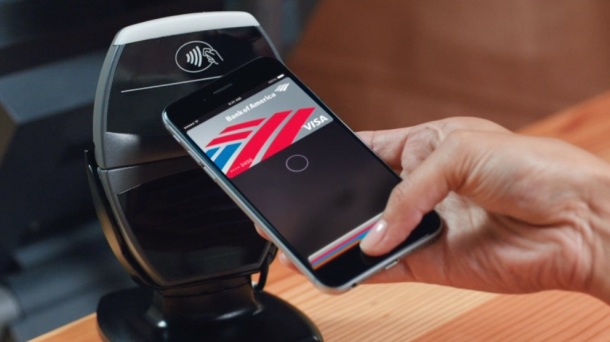
A New Fraud Concern with Apple Pay

A big concern these days for anyone with a credit card, merchants and customers alike, is fraud. We no longer explicitly trust big name companies to have completely secure measures; however, it is assumed they have more than adequate measures. Apple’s release of Apple Pay seemed well-tested, but the unusually high fraud rates that have recently come to light tell a different story.

When Apple Pay first came out, numerous banks and credit card companies were excited and eager to be in Apple’s list of chosen companies. Apple’s strategy to stay simple and clear-cut left the company neglecting to include many customer details upon signing up for the mobile program. The verification of phone numbers and addresses were not something Apple Pay required, and this is shocking considering the amount of fraud that could occur without these. Online companies, such as ourselves, know that requiring the customer’s address can catch fraud before it occurs due to time sensitivity and faulty addresses. Faulty addresses are caught in the payment process, and it normally takes a few days it takes to ship packages, so there is more time to catch thieves. However, in the case of Apple Pay, they only required basic credit card information from a user. According to a New York Times article, an industry consultant named Cherian Abraham put Apple Pay’s fraud rate at an alarming 6 percent. In comparison, a normal credit card fraud rate is at 10 cents for every $100 spent. That’s 60 times the average credit card fraud rate.

In addition, the New York Times article stated that banks are also to blame because of their silence and lack of further precautionary measures and fraud defenses. Many banks and establishments trusted that Apple Pay would be aware of any fraud issues, and they also wanted to remain in good graces with Apple. Efforts to direct flagged credit cards were flawed because many banks directed callers to customer support centers rather than fraud prevention centers. The system to register credit cards has flaws, and neither the banks nor Apple are claiming failure.

Smart thieves can take advantage of this system by using stolen credit card numbers into iPhones and then using Apple Pay with those phones. Innovation is one thing, but when it becomes a hazard to security and an open invitation to fraud, Apple may need to reevaluate its security measures and demand stricter bank standards. They can begin to better prepare banks for Apple Pay and all the troubleshooting that accompanies a new kind of credit card.

According to PointofSale.com, since Apple Pay’s introduction, iPhone 6 customers have the option to use their mobile device to pay for goods and services at more than 220,000 Apple Pay partner merchants, which include retailers, financial institutions, restaurants, amusement parks and even vending machines. This staggering number of places leaves even more room for mistakes to occur, and all any customer needs is a smart phone and a bank account-real or fake. Gartner Research predicts that mobile payments will only continue to grow at a 35 percent growth rate until 2017, and this will bring 450 million global users. Those large numbers are going to bring Apple Pay’s security threats to an even brighter light, and the company should make sure they have lasting global fraud strategies in place. The technology has gotten easier to implement, to use, and to hack.

How can merchants and customers who want to be innovative and use Apple Pay keep their credit cards safe from fraud? A website called MainStreet.com, listed a few options to help protect customers using Apple Pay. First, research good banks before you choose one, and find a bank that has progressed with EMV chips and other new technologies. Look into their security measures and make sure they have the proper steps needed to deal with any fraud. Another two strategies are to set up transaction alerts and sign up for card and transaction monitoring services. These will help you notice any abnormalities that occur on your card or any large purchases that you don’t recognize. You should also stay on top of new cards, and get your card enrolled in Apple Pay. Any additional enrolled cards on Apple Pay will then trigger red flags for fraud. Lastly, it is important to pay attention to your credit card statements and assume you are not exempt from having your card stolen. With recent credit card breeches, the best way to protect yourself is by being proactive and careful.

7 Ways to Prevent Data Theft

In the past 12 months, we have seen data breaches from large companies such as Target, Home Depot and Staples. Big banks and health care systems have also been victims of cyber attacks. With technology always advancing, these attacks will continue to happen. Below are some tips to help prevent and minimize the chances of a data breach for you and your company.

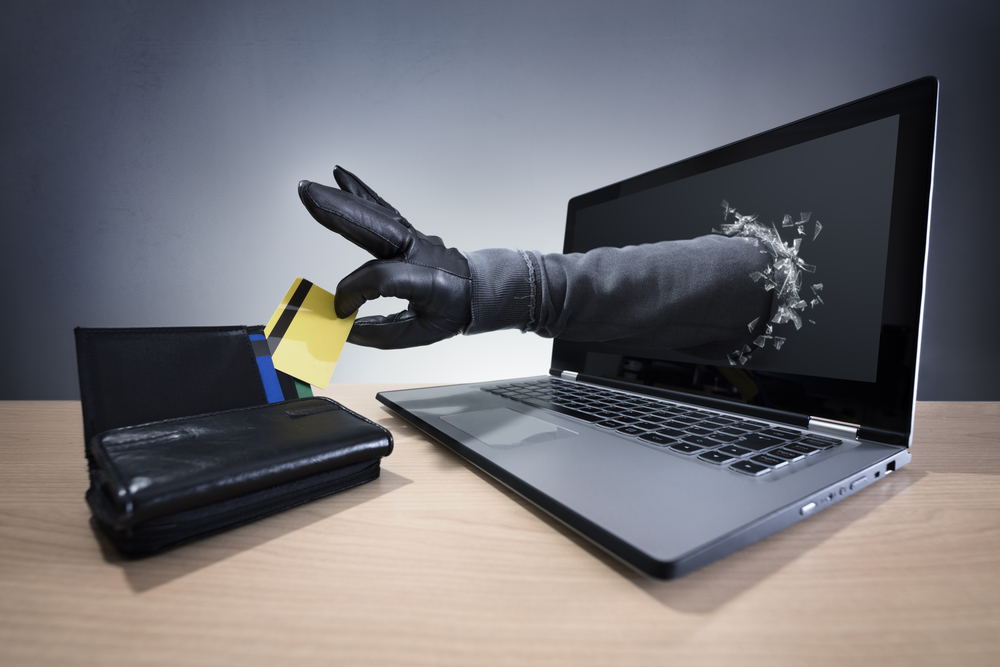
Stealing a credit card through a laptop concept for computer hacker, network security and electronic banking security

1. Frequently change pins and passwords to personal accounts.

By doing so, you can help keep track of which websites have your information saved on them and how long that information has been saved.

2. Constantly monitor all financial accounts for suspicious activity.

Although we now live in the digital age and primarily use online banking, your chances decrease significantly if you also keep a written copy, such as a checkbook ledger, after making major transactions.

3. Properly dispose of sensitive data.

Make sure to shred any documents that are no longer needed that include important information such as social security or credit card numbers. Also make sure that those numbers aren’t saved on computers when you dispose of those as well.

4. Control physical access to business computers.

Give each employee their own login and username to prevent unauthorized use. Keep computers locked up during non-business hours.

5. Freeze credit cards in the case of suspicious activity.

This will make sure to protect your money while you figure out the situation.

6. Do not overshare on social media.

Whether it be for a company or personal, too much information can help making theft easier for the hacker. Wait to post comments or stories about a vacation until you are back home.

7. Keep software up to date.

Update software as soon as it is available for security and web browsers as they can detect security vulnerabilities.

Have you already been part of a security breach? What should you do now? First, do not panic. Get a copy of your credit report and double check for any unauthorized transactions. If you notice anything out of the ordinary, put a freeze to your account immediately. Then call issuer to dispute charges and obtain a new card. Finally, make sure to change all passwords and pins to prevent future situations.